

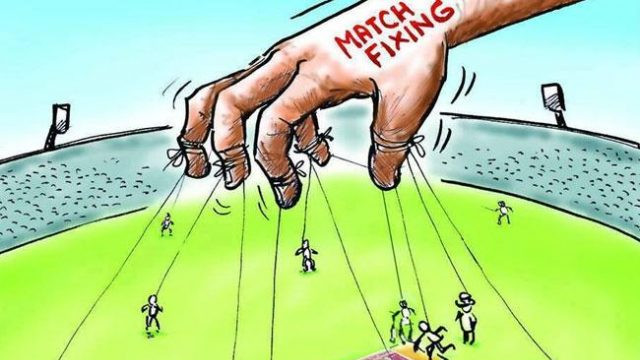
Manipulation of sporting events, known as match-fixing, refers to the deliberate influencing of a match or part of it for financial gain, typically in connection with betting. It is a serious form of sports corruption that undermines trust in sport and damages its integrity. The Institute for Gambling Regulation points out that the legal betting market today has control mechanisms that help detect and report suspicious betting patterns at an early stage. At the same time, however, a significant part of the problem takes place outside the legal market, in the illegal environment, where comparable control mechanisms and effective oversight are lacking.
 A problem with a tangible scale
According to data from the Football Association of the Czech Republic, a total of 284 suspicions of match manipulation in football were recorded between 2019 and 2024. These cases most often involved lower-tier competitions, friendly matches, and youth leagues.
Match-fixing does not only involve influencing the final outcome of matches, but also specific in-game events that can be bet on, such as the number of cards, corner kicks, or shots on goal. This type of manipulation is often more difficult to detect and requires detailed data analysis and close cooperation between sports institutions and legal operators.
The legal market has tools to detect risks
Licensed betting operators in the Czech Republic have established procedures to monitor suspicious betting behavior and respond accordingly. They use analytical and technical tools, internal control mechanisms, and specialized teams that evaluate unusual betting patterns.
If there is suspicion of potential match manipulation, this information can be shared with the relevant authorities. Thanks to this, some risks can be identified early and addressed at an initial stage.
“The legal market is not part of the problem, but an important part of the solution. It is precisely within the legal market that mechanisms exist to identify, assess, and report suspicious betting patterns. This is a fundamental difference compared to the illegal market, where such controls are absent,” says Jan Řehola, Director of the Institute for Gambling Regulation.
Cooperation with the FACR delivers concrete results
Cooperation with the Football Association of the Czech Republic (FACR) plays an important role in this area. Mechanisms have been established between representatives of the legal market and the FAČR for sharing information about suspicious betting activity and behavioral patterns that may indicate potential match manipulation. This cooperation includes timely reporting of suspicious activities, joint evaluation, and the submission of relevant findings for further investigation.
This coordination helps identify risky cases at an early stage and, based on practical experience, has also contributed to uncovering recent cases. Members of the Institute for Gambling Regulation have been actively involved in this process, identifying suspicious activities within their internal control and monitoring systems and reporting them to relevant partners.
“Detailed data analysis, rapid evaluation of suspicious patterns, and effective communication between stakeholders make it possible to detect problems at an early stage. The current case once again demonstrates that cooperation between sports institutions and the legal market has real value,” adds Jan Řehola.
The greatest risk remains outside the legal market
Licensed operators have technical and analytical tools, internal control mechanisms, and risk management processes that enable them to detect, assess, and report suspicious betting patterns. This fundamentally distinguishes them from the illegal market, where comparable tools, systematic monitoring, and accountability to sports associations and other institutions are absent.
At the same time, experience shows that a significant share of bets linked to manipulated matches is shifting outside the legal market to illegal offshore operators. This is why match-fixing cannot be effectively tackled without consistently limiting and blocking illegal supply.
“The legal market has both the tools and the responsibility, but if risky betting activities move into the illegal environment, match-fixing cannot be effectively suppressed without consistently restricting illegal supply,” says Jan Řehola.
Prevention and awareness
In addition to analytical, control, and enforcement tools, prevention is also key. Awareness among athletes, officials, and the public about the risks associated with match manipulation and illegal gambling is essential for the long-term reduction of this phenomenon.
The Institute for Gambling Regulation is therefore actively engaged in education on responsible gambling and the risks associated with the illegal market, including through the Responsible Gambling project, which focuses on raising awareness of safe behavior in gambling.
Protecting the integrity of sport must be a shared goal
“Limiting illegal gambling, effective reporting of suspicious activities, and close cooperation between sports institutions, the state, and the legal market are essential conditions for protecting the integrity of sport. Only their combination can deliver real results,” concludes Jan Řehola, Director of the Institute for Gambling Regulation.

