


The international trade media outlet iGaming Business has published an article on the Czech approach to responsible gambling and the IRIS project, which the Institute for Gambling Regulation is developing in cooperation with licensed operators, addiction experts, researchers and public administration.
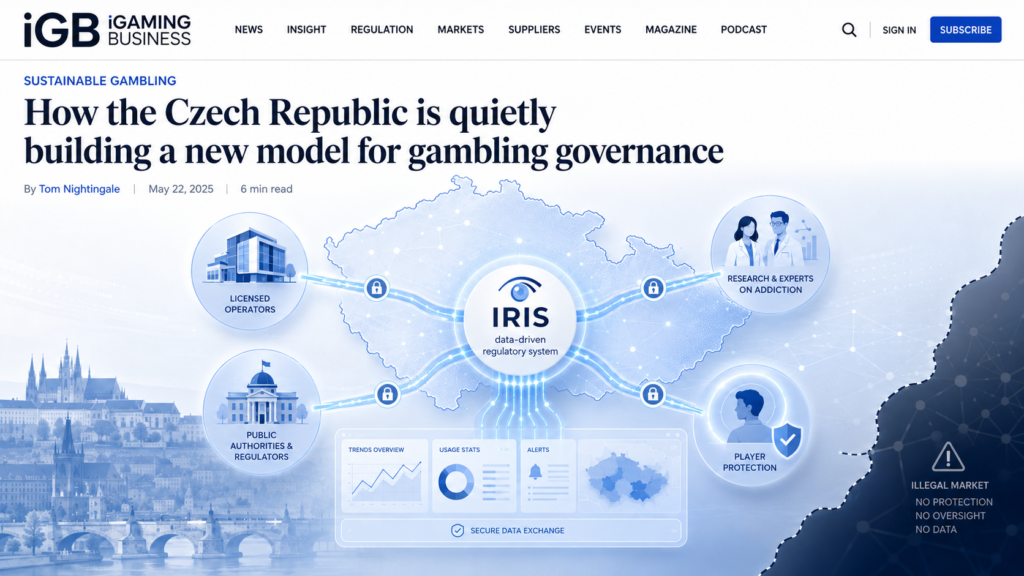 At the centre of attention is a model that is not based solely on bans and blanket restrictions, but on data, shared responsibility and the early identification of risky behaviour. This is precisely the role that IPRH has long sought to fulfil: bringing together the licensed market, experts and public administration so that gambling regulation is based on real data, practical experience and expert debate.
In the future, the IRIS project should make it possible to identify risky patterns of player behaviour across the licensed market, rather than only from the perspective of a single operator. Its aim is not to offer a simple solution for every situation, but to create a tool that helps detect warning signs earlier and enables a proportionate response before the problem deepens.
However, a responsible approach must also include a systematic fight against the black market. If preventive measures merely push at-risk players out of the legal environment, the problem will not be solved — it will move to a space where the state has no control over player protection, identity verification or financial flows. This is why, alongside the IRIS project, IPRH is also developing its agenda for combating illegal gambling, including through the National Platform against Illegal Gambling.
The full iGaming Business article is available here:
How the Czech Republic is quietly building a new model for gambling governance

