

How can we build an effective policy for addiction prevention and harm reduction? According to the Institute for Gambling Regulation (IPRH), one of the answers lies in broader cooperation – not only between the state, experts and the non-profit sector, but also with providers of services and products with addictive potential. Experience from the regulated gambling sector shows that this approach can deliver concrete and measurable results.

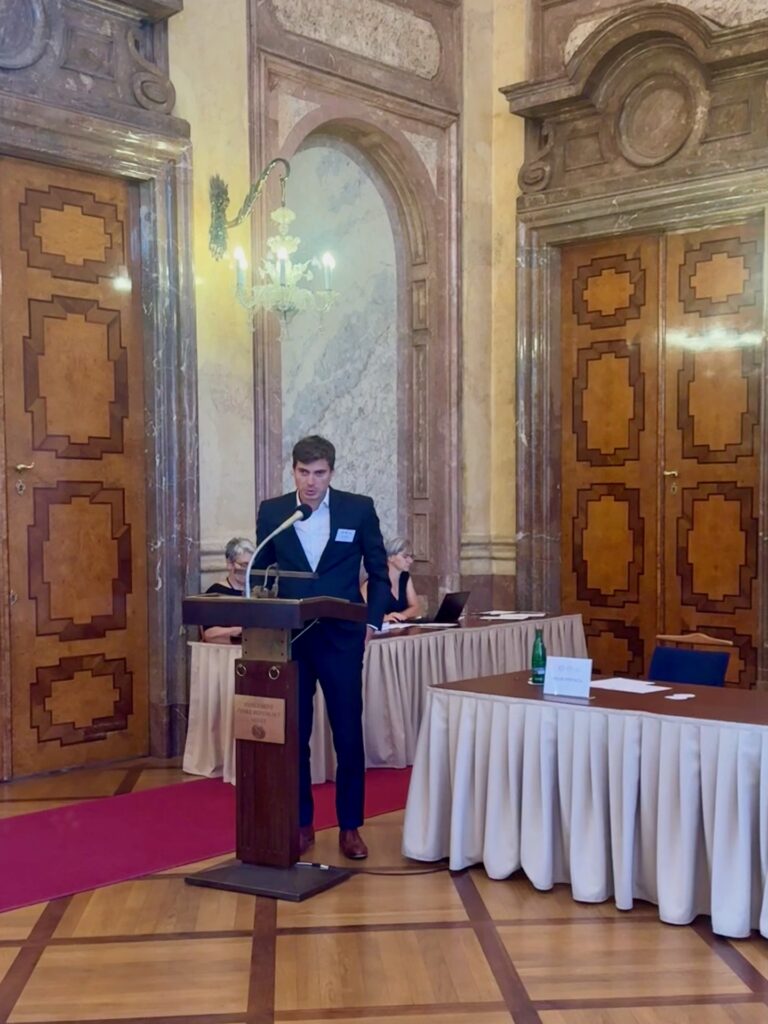
This was one of the key topics discussed at the Czech Senate public hearing “Addiction Policy as a Shared Responsibility of the State”, held on 30 July. Jan Řehola, Director of IPRH, represented the Institute in the discussion.
Operators as Part of Prevention
Experience from the regulated gambling sector shows that operators do not have to be viewed solely as part of the problem. Through their direct contact with players, available technologies and data, they can also be part of the solution and active partners in prevention.
The tools that have been introduced or further developed in recent years provide clear evidence of this, made possible through cooperation between the state, experts and operators.
RVO: A Sixfold Increase in Voluntary Self-Exclusion
A strong example is the Register of Excluded Persons (RVO). Since 1 July 2024, players have been able to request registration directly through their account with an operator.
The average number of new voluntary registrations subsequently increased from approximately 450 to almost 2,900 people per month, representing an increase of more than sixfold.
While 4,267 people voluntarily registered in 2023, the figure rose to 20,151 in 2024, followed by another 25,643 between January and 1 November 2025. As of 1 November 2025, a total of 55,361 people had registered voluntarily, with approximately 71% using the option to register through an operator.
Help Available Directly Where Players Gamble
The same principle applies to the Panic Button, which allows players to immediately suspend their participation in gambling for 48 hours. It is available directly within the operator environment, at the very moment when a player may need it.
Operators also play an important role in making the Gambling Helpline accessible. They provide contact details for professional support on their websites and within user environments and, where problematic gambling is identified, can directly refer players to professional help.
The number of contacts with the Gambling Helpline has been steadily increasing. From 144 calls in 2022, the figure rose to 618 in 2023, 1,718 in 2024 and 2,660 in 2025. In the first quarter of 2026 alone, the helpline recorded another 730 calls, representing a year-on-year increase of 43%.



Data Can Help Identify Risk Earlier
Another example is IRIS – the Risky Gambling Identifier, which uses pseudonymised data to better identify patterns of risky behaviour across individual operators.
This approach moves prevention beyond general awareness towards the possibility of identifying risky behaviour at an earlier stage and offering support before the problem becomes more serious.
We Need the Same Principle in the Digital Environment
At the Senate hearing, Jan Řehola also highlighted the development of new forms of digital addiction, particularly among children and young people. While the regulated gambling sector has a range of player protection tools in place, children in the digital environment are exposed to potentially risky mechanisms that are often available without comparable safeguards.
Examples include loot boxes, skins and other gaming mechanisms that may contain elements resembling gambling behaviour.
Here too, there is a need to find ways to strengthen cooperation between the state, experts, parents, schools, technology companies and the gaming industry.
Operators Do Not Have to Be Part of the Problem
Experience from the regulated gambling sector demonstrates a simple principle: if we want to prevent addiction effectively, we should not automatically exclude certain actors from cooperation simply because they operate in an industry with addictive potential. On the contrary, their position can be used to strengthen prevention and user protection.
This does not mean giving up regulation or operator responsibility. It means establishing rules that allow their technologies, data and direct contact with users to also serve prevention and early intervention.
Addiction policy therefore cannot rely solely on bans and regulation. It needs cooperation, data and the involvement of everyone who can help identify risky behaviour at an early stage.
The experience of the gambling sector shows that responsible business does not have to be merely the subject of regulation. It can also be a partner of the state in protecting people.

