


On the last day of October, the second annual National Conference on Gambling took place. Key representatives from state and public administration, as well as experts in the field of gambling issues and legislators, gathered at the premises of the Czech Academy of Sciences to discuss topics related to gambling from various perspectives.
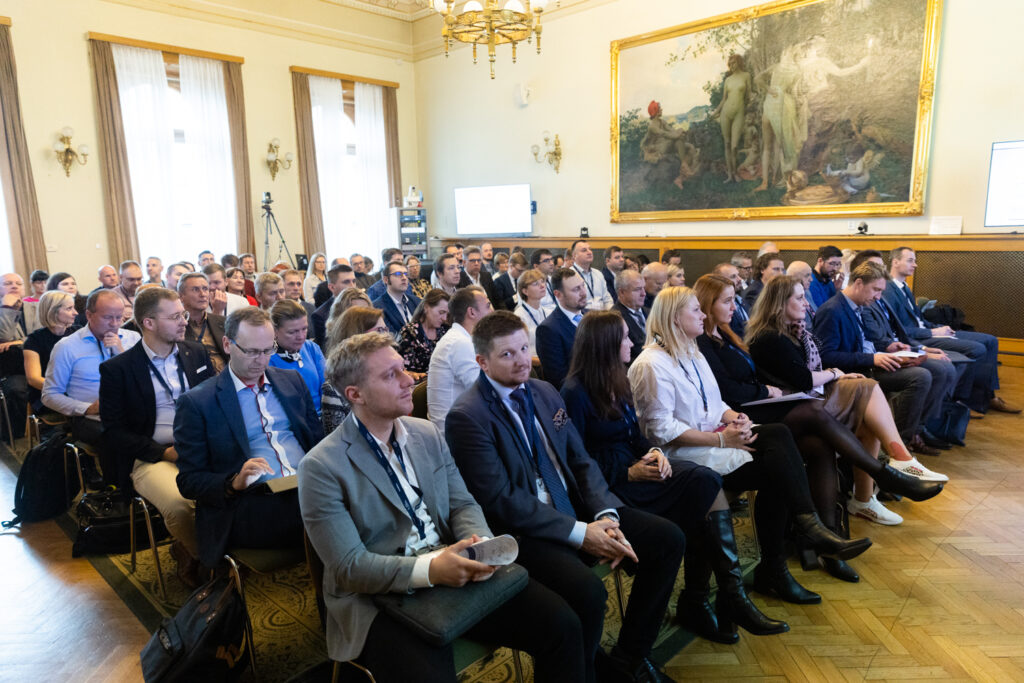
Each speaker has their own experience in the field of gambling or focuses on a specific aspect of it. Together, it was a unique opportunity for the audience to hear such a diverse range of opinions in one place.
In five panels, participants focused not only on the practical implications of the new regulation of gambling, the final wording of which is now awaiting the president’s signature, and many obligations will impact the market from January 1, 2024. They also discussed the regulation of gambling at the local level and the financing of municipalities from gambling taxation, programs to reduce the risks of gambling, and their current underfunding. The discussion also included new products that could make gambling more attractive, aiming to make the Czech market more competitive against illegal gambling. Another topic was how to establish smart regulation of gambling in the Czech Republic and, based on goal setting, analysis, and evaluation, determine whether the preset goals have been achieved.

Practical Impacts of the New Regulation of Gambling
The gambling market in the Czech Republic is gearing up for the largest amendment to the gambling law since 2017. Hence, the first panel focused on discussing the practical impacts of the new regulation of gambling. Invitations were extended to J. Chudoba from Sazka a.s., E. Pertl Růtová from Bonver Win, a.s., L. Vojtko from cbData s.r.o., and M. Šabo from the Ministry of Finance.
For a long time, the final version of the amendment was unknown, creating a certain uncertainty across the market and concerns about the limited time for the development and implementation of technical solutions. There were also concerns about the necessary structural adjustments to all gaming establishments and casinos associated with the amendment. Nevertheless, both the Ministry of Finance and market representatives see positives in the amendment. These include tightening the fight against illegal online gambling, introducing the Panic Button (allowing players to self-exclude for 48 hours), the option to self-exclude from gambling directly with the operator, and refining several currently imprecise terms that the market has grappled with for a long time.
Changes in municipal financing and the impacts of municipal regulation
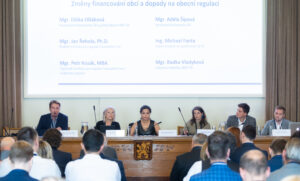
Regulation of gambling at the local level has long been a controversial issue. With the amendment of the budgetary allocation of the gambling tax, the topic of municipal financing from gambling and local regulation in general has entered into a lively debate. Invitations to the discussion were accepted by Member of Parliament E. Olšáková, who is also the chairwoman of the Union of Local Self-Governments, and R. Vladyková from the Union of Towns and Municipalities of the Czech Republic. Both expressed their dissatisfaction with the amendment to the budgetary allocation of the gambling tax, believing that it is set in favor of the state and municipalities that have expressed a prohibitionist stance towards gambling. However, there is a disproportion, to the detriment of municipalities that have decided to permit gambling within their territories. Senator Šípová, who also accepted the invitation to this panel, highlighted the negative impacts of gambling and the violation of regulations by operators, as well as the underfunding of support services. She emphasized the necessity of obtaining more data on gambling, its impacts, and benefits. Other panelists, J. Řehola from IFGR and M. Fanta from CETA – Center for Economic and Market Analysis, agreed on the need to establish regulation based on data and studies.
Consensus across the panelists prevailed that prohibition is probably not the best solution, and it would be good for the revenues from the tax, whether held by municipalities or the state, to be allocated to research, prevention, and treatment of pathological gambling.
Challenges of programs and the reduction of gambling risks.
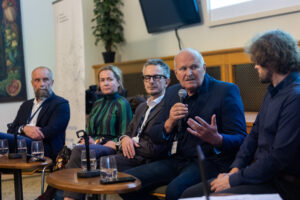
Programs for reducing risks are also perceived as a necessity by gambling operators. However, challenges differ for the online world and brick-and-mortar establishments. This is reflected in both the communication with the player and the tools and approaches developed. Participants in the discussion included M. Holan, an addiction specialist, F. Trantina, Z. Brázdil from Tipsport, E. Pert Růtová from Bonver Win a.s., and L. Vojtko from cbData s.r.o.
New products on the Czech market
To make the Czech legal market more competitive in the fight against illegal markets, it is essential to offer an attractive proposition for players. The amendment to the Gambling Act will allow the operation of a common Live Dealer Game abroad. The debate delved into the rules and technical possibilities of this game abroad and the specific conditions under which it can be operated here. A. Bargel from Absolute Live Gaming, M. Tuláček from the Ministry of Finance, and D. Huspeka from the Rebuy Stars group participated in this discussion.

In the final panel, attended by the CEO Dávid Lenčéš from the Office for the Regulation of Gambling, MP P. Nacher, and M. Šabo from the Ministry of Finance, they addressed the question of what hinders smart regulation?
In other countries, gambling regulation and taxation are established based on predetermined goals and analyses, as seen in Sweden, for example. Unfortunately, this is not always the case in the Czech Republic. Even the connection of the Gambling Act amendment with the consolidation package denied any political attention and discussion in the Chamber of Deputies of the Czech Republic.
All panelists agreed that the main obstacles to smart regulation are the stigmatization of the gambling industry and the lack of expert public debate, goal setting, and necessary analyses. To achieve any progress, education, communication, collaboration between experts, the state, and sector representatives are required. Self-regulation and responsible gambling are integral parts of this collaboration so that gambling operators are considered partners, as is the case in Slovakia.

